I’ve heard that doctors are told that when they hear hoofbeats that they should look for horses instead of zebras. Look for the common, not the rare.
When a kid with a history of tethered cord starts falling and having trouble with weakness and incontinence, the obvious concern is that the cord is re-tethered. Re-tethering is pretty rare (~ 2% according to Ogiwara et al.), but we still couldn’t think horses when this rare possibility was stampeding towards us. We have just spent about a month testing everything that could be tested on the girl. Now we know that we are dealing with horses! We finally have some tentative answers, and there are no zebras involved…

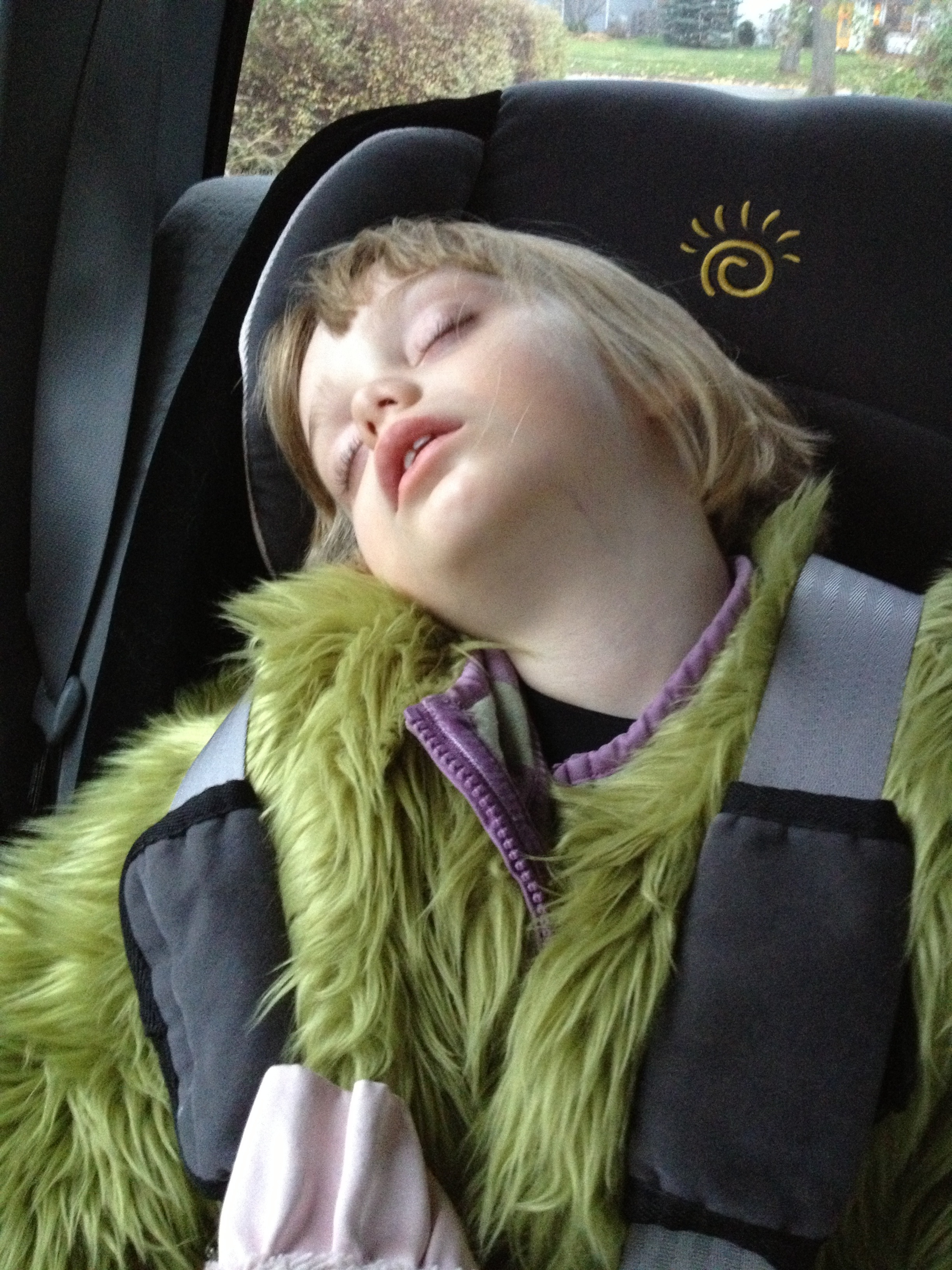
The tentative answer is unexpected. The MRI of the spine showed some large adenoids (that had grown back after they were removed 2.5 years ago), large tonsils, and large lymph nodes. We visited the ENT yesterday and he said that the girls tonsils were almost as big as they get. He was concerned that she has sleep problems that could be on the verge of sleep apnea. She has lots of symptoms of sleep disordered breathing:
The most obvious is snoring…she sounds a lot like this:

The girl has never been one to sleep well, and we kept putting off the sleep studies that have been suggested over and over. She just has so many doctor visits, we didn’t want to subject her to any more. We never imagined that the problems sleeping could be serious…I mean, I’m seriously tired all the time, but for the girl, we didn’t realize it was that big of a problem.
It turns out that sleep apnea is a pretty serious problem. About 2% of the child population has sleep disordered breathing (American Academy of Otolaryngology), and this can lead to problems with behavior and learning, enuresis (bedwetting), slow growth, obesity, and cardiovascular issues (American Academy of Otolaryngology). Removing the tonsils and adenoids is the most common and effective treatment for sleep disordered breathing and obstructed sleep apnea.
We are optimistic that the tonsillectomy will help her sleep, and once she is actually resting she will be stronger and improve in all of the ways that she did immediately after the first surgery.

Sources:
American Academy of Otolaryngology. 2011. Fact Sheet: Pediatric sleep disordered breathing / obstructive sleep apnea. http://www.entnet.org/HealthInformation/Could-Child-Have-Sleep-Apnea.cfm. accessed 16 November 2012.
Ogiwara, H., A. Lyszczarz, T. Alden, R. Bowman, D. McCLone, and T. Tomita. 2011. Retethering of transected fatty filum terminales. Journal of Neurosurgery Pediatrics, 7:42-46.